Affordable truck hire gives a small business access to delivery capacity without the cost and administration of owning a commercial vehicle.
You book the type of bakkie or truck you need, use it for a specific delivery and pay only when your business requires transport.
In our experience at Loadit, this model works particularly well for businesses with changing delivery volumes. A retailer may need one bakkie during a quiet week but three trucks during a month-end promotion. An event company may have several large deliveries in summer and almost none during winter.
On-demand transport lets a business increase or reduce its delivery capacity without financing additional vehicles, employing permanent drivers or paying for trucks that spend half the month parked.
Which Small Businesses Use On-Demand Truck Hire?
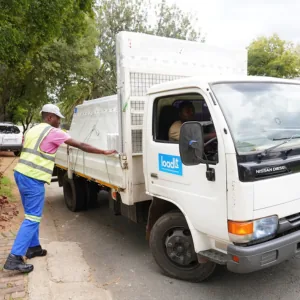
Truck hire is not limited to moving companies or large manufacturers.
Many small and medium-sized businesses need occasional access to vehicles that are larger than ordinary courier vans.
E-Commerce and Retail Businesses
Online retailers and independent stores use bakkies and trucks to transport:
- Boxes of consumer products
- Stock between warehouses and stores
- Large online orders
- Retail displays and shelving
- Customer purchases that do not fit into courier vehicles
These businesses may need same-day transport after an unexpected sales increase or scheduled weekly deliveries to several branches.
Furniture and Décor Businesses
Furniture manufacturers, upholsterers and décor stores regularly deliver:
- Custom couches
- Dining tables and chairs
- Beds and mattresses
- Cabinets and shelving
- Mirrors and artwork
- Large decorative installations
These goods may not be exceptionally heavy, but their dimensions make them expensive or unsuitable for traditional parcel couriers.
Construction and Light Industrial Businesses
Contractors, installers and small manufacturers may require transport for:
- Tools and equipment
- Bulk tiles
- Fencing materials
- Structural frames
- Manufactured components
- Commercial fittings
- Small machinery
The vehicle must be selected according to the item dimensions, total weight and site access. Long materials may require an open vehicle, while tools and sensitive components may need an enclosed truck.
Offices and Professional Businesses
It isn't only stock that needs moving.
Businesses also hire trucks for office relocations, archived documents, IT equipment, excess furniture and deliveries between branches.
Useful article to read: Bakkie vs Truck Hire: Which Should I Choose?
Event and Catering Businesses
Event planners, caterers and rental suppliers use trucks for:
- Tables and chairs
- Mobile bars
- Stage panels
- Lighting equipment
- Sound systems
- Floral structures
- Catering appliances
These businesses often experience strong seasonal demand and may need several vehicles on the same day.
What Size Vehicle Does Your Business Need?
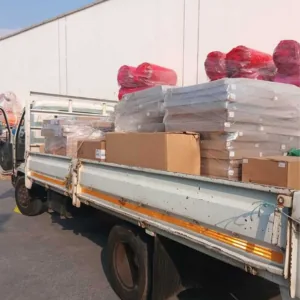
The correct vehicle is the smallest one that can carry the complete load safely in one trip.
Booking a truck that is too large wastes money. Booking one that is too small can result in a second trip, which increases kilometres, labour time and delivery delays.
| Vehicle | Typical business loads |
|---|---|
| 1-ton bakkie | Small appliances, tools, retail boxes, a single furniture item and quick local deliveries |
| 1.5-ton vehicle | Electronics, catering equipment, office stock, several furniture items and event equipment |
| 3-ton truck | Multi-stop retail distribution, large appliances, bulky furniture orders and small office moves |
| 8-ton truck | Palletised building materials, heavy machinery, major event infrastructure and bulk warehouse transfers |
1-Ton Bakkie
A 1-ton bakkie has a loading deck of approximately 2.2 metres by 1.45 metres, depending on the vehicle. It is suitable for:
- Small appliances
- Tools
- Retail boxes
- A single furniture item
- Light commercial stock
- Quick local deliveries
An open bakkie provides flexibility for certain long or awkward items but offers less protection from rain, dust and road debris.
1.5-Ton Vehicle
A 1.5-ton bakkie, panel van or small truck can handle moderate commercial loads such as:
- Electronics
- Catering equipment
- Office stock
- Several furniture items
- Décor and event equipment
- A larger collection of retail boxes
An enclosed option is helpful when products need protection from weather, dirt or theft.
3-Ton Truck
A 3-ton truck works well for:
- Multi-stop retail distribution
- Large appliances
- Bulky furniture orders
- Small office moves
- Raw materials
- Larger event setups
This vehicle provides more usable loading space and may prevent the need for several bakkie trips.
8-Ton Truck
An 8-ton truck may be suitable for high-volume commercial loads, including:
- Palletised building materials
- Heavy machinery
- Large quantities of tiles or fittings
- Major event infrastructure
- Bulk warehouse transfers
Large vehicles require more access space. Check loading bays, height restrictions, gate widths and turning areas before booking.
Why Is On-Demand Truck Hire Affordable?
On-demand transport replaces fixed monthly expenses with a variable cost.
You pay for delivery capacity when you use it, rather than paying for a vehicle every day of the month.
No Vehicle Finance Commitment
Purchasing a commercial vehicle may require a deposit and monthly repayments over several years.
Those instalments continue even when sales decline or the truck is not being used. On-demand hire allows you to keep that capital available for stock, equipment, staff and marketing.
No Permanent Commercial Insurance Cost
An owned truck requires commercial vehicle insurance.
You may also need tracking, additional security and suitable cover for business use. With on-demand transport, these vehicle-related costs form part of the provider's operating model. However, you must still confirm whether Goods in Transit cover applies to your stock or needs to be arranged separately.
No Maintenance Surprises
A business that owns a vehicle must budget for:
- Services
- Tyres
- Brakes
- Licensing
- Repairs
- Roadside assistance
- Unexpected breakdowns
These expenses can be difficult to predict. A major repair may occur during the same month that the business already faces low sales or high stock costs.
No Permanent Driver Expense
A permanent driver may involve salary, leave, UIF, COIDA-related responsibilities and ongoing HR administration.
On-demand truck hire gives the business access to a vehicle and driver for the specific job. Additional ground helpers can be requested when loading or offloading requires extra labour.
No Cost During Quiet Periods
A business-owned truck continues costing money while parked.
Finance, insurance, tracking and storage do not disappear because there are no deliveries that week. With on-demand hire, transport spending can fall when business activity slows.
How Does It Compare with Traditional Couriers?
Traditional courier services work well for parcels, envelopes and smaller boxed products. They may become expensive or unsuitable when the goods are bulky, irregular or require special handling.
Couriers commonly consider volumetric weight, which is based on the amount of space a parcel occupies rather than its physical weight alone. This can make large but light products expensive to send.
Examples include:
- Plastic displays
- Office chairs
- Large décor pieces
- Custom furniture
- Foam products
- Oversized packaging
On-demand truck hire is generally priced according to the vehicle, route, time and labour requirements.
A business can fill the available loading space with several customer orders rather than paying a separate courier fee for each bulky item.
On-Demand Transport Can Scale with Sales
Small businesses rarely have perfectly consistent delivery volumes.
The Quiet-Week Problem
A business may own a 1.5-ton bakkie but only use it once during a slow week. The full monthly costs still apply.
The Peak-Season Problem
The same vehicle may be too small during Black Friday, month-end, wedding season or a large promotion. The business then faces delivery backlogs or must find emergency subcontractors.
The On-Demand Alternative
With on-demand transport, the business can book no trucks during a slow period and several vehicles when demand rises. It can also change vehicle size according to each load.
A furniture company may use a bakkie for one couch on Monday and an 8-ton truck for a bulk commercial order on Friday.
When Does Owning a Vehicle Make More Sense?
Buying or leasing a delivery vehicle may become more cost-effective when your business has steady, predictable and near-daily delivery requirements.
As a broad operational guideline, ownership deserves serious consideration when the vehicle would be productively used for approximately 18 to 22 full delivery days per month, or around 75% to 80% of normal business hours.
This is not a universal rule. You must calculate your own total cost of ownership, including:
- Finance repayments
- Insurance
- Fuel
- Maintenance
- Licensing
- Driver costs
- Parking and security
- Administrative time
- Vehicle depreciation
- Breakdown and replacement-vehicle risk
If you need a truck less than three or four days per week, on-demand hire will often remain more flexible and cost-effective.
How to Reduce Your Truck-Hire Costs
Affordable transport depends on operational discipline. Poor planning increases kilometres, vehicle time and labour costs.
Choose the Correct Vehicle
Keep accurate dimensions and weights for the products you deliver regularly. Use this information to select the smallest vehicle that can safely complete the delivery in one trip.
Do not book an 8-ton truck when a 3-ton truck will carry the full load. Do not force a 3-ton load into a 1-ton bakkie if this will require multiple trips.
Group Deliveries by Area
Instead of dispatching a vehicle for each order, combine deliveries going to the same region. A business might schedule:
- North and East Rand deliveries on Tuesday
- Centurion and Pretoria deliveries on Thursday
- West Rand deliveries on Friday
This reduces repeated kilometres and makes better use of the vehicle's loading space.
Use Multi-Stop Routes
A single multi-stop booking is usually more efficient than several separate point-to-point bookings.
Arrange the stops in a logical sequence. The route should move through the delivery area without unnecessary backtracking.
Load the truck in reverse delivery order where possible. The first customer's order should be the easiest one to access at the destination.
Stage Stock Before the Truck Arrives
Waiting time is one of the most avoidable delivery costs. The truck should not arrive while your team is still:
- Picking stock
- Wrapping furniture
- Printing invoices
- Searching for missing products
- Building pallets
- Confirming customer addresses
Create a strict stage-before-arrival rule. Everything should be picked, checked, packed, labelled and positioned near the dispatch area before the scheduled collection time.
Schedule Outside Peak Traffic
Where the customer's schedule allows it, avoid major morning and afternoon traffic periods. A mid-morning or early-afternoon departure may reduce travel time and help the vehicle complete more stops efficiently.
In busy South African metros, traffic between approximately 07:00 and 09:00 and again between 16:00 and 18:30 can add considerable time to a multi-stop route.
Prevent Failed Deliveries
A failed delivery can require the stock to return to your warehouse and be dispatched again. This effectively doubles part of the transport cost.
Before the vehicle leaves:
- Confirm the customer's address
- Verify the map pin
- Confirm that someone will be present
- Obtain the estate access code
- Check loading-zone or height restrictions
- Confirm the customer's contact number
- Explain any installation or offloading requirements
Send the customer an SMS or WhatsApp update on the morning of delivery. If tracking is available, share the appropriate arrival information.
A Johannesburg Event Company That Stopped Owning a Bakkie
A representative Loadit case involved a boutique event staging and décor business in Johannesburg. The company manufactured and rented premium furniture, staging panels and custom floral arches for weddings and corporate functions.
The business owned a 1.5-ton dropside bakkie. This created two opposing problems.
During November, December and March, the single bakkie could not manage several weekend events. The business sometimes had to turn away work because it lacked delivery capacity.
During the quieter winter months, the bakkie spent long periods parked. The company still paid approximately R9,500 per month towards vehicle finance, commercial tracking, insurance and its driver's base salary.
The owner also spent time managing licensing, servicing and late-night breakdowns.
The company sold the vehicle and switched to pay-as-you-go transport.
It selected each vehicle according to the event schedule. For ordinary weekday deliveries, it used a 1.5-ton enclosed vehicle to protect fabrics and electronics. For large festivals, it booked an 8-ton dropside truck with three additional helpers.
A typical multi-stop route started at the workshop in Midrand, delivered equipment to a corporate venue in Sandton and continued to a wedding estate in Muldersdrift.
The Measurable Result
The business achieved the following outcomes:
- Fixed monthly vehicle liabilities dropped from approximately R9,500 to zero.
- Transport spending could fall to zero during very quiet periods.
- Total annual logistics costs fell by approximately 34% compared with the previous ownership model.
- The business gained the ability to book different vehicle sizes.
- It could increase delivery capacity without purchasing another truck.
On one busy Saturday, the company booked three trucks at the same time and completed three large events.
That would not have been possible with its previous single-bakkie fleet.
What Should an Affordable Truck-Hire Quote Include?
Do not compare providers using the base price alone. A low initial quote can become expensive once waiting time, additional kilometres and labour are added.
Vehicle and Route
Confirm:
- The vehicle size and body type
- The collection and delivery addresses
- Every additional stop
- The included distance
- The cost of additional kilometres
- Whether tolls and fuel are included
Loading and Waiting Time
Ask how much loading and offloading time is included.
Some providers allow a limited period before additional waiting charges apply. Find out whether waiting time is charged per minute, per 15-minute period or per hour.
Driver and Helpers
Never assume the driver will carry stock into a building.
- Whether the booking includes only the vehicle and driver
- Whether the driver assists with loading
- How many additional helpers are included
- Whether labour is charged at a flat or hourly rate
- Whether stairs or long carrying distances cost extra
Cancellation and Amendments
Small-business schedules change.
A supplier may miss a production deadline, or a customer may postpone a delivery. Check:
- The cancellation deadline
- The late-cancellation fee
- Whether the date or time can be changed
- How route amendments affect the price
- What happens if the customer cancels while the truck is already travelling
Confirm the Insurance Position
Do not assume that Goods in Transit insurance is automatically included in the standard rate. Before dispatching valuable stock, confirm:
- Whether Goods in Transit cover applies
- The maximum cover per load
- The applicable excess
- Whether theft and hijacking are included
- Whether fragile or high-value goods are excluded
- Whether inadequate packing affects a claim
- Whether additional single-trip cover is available
If the load value exceeds the available cover, speak to your insurer or the transport provider before collection.
Check Driver, Vehicle and Backup Standards
An unreliable cheap truck can cost your business more than a slightly higher professional quote. A breakdown may result in a missed installation, an unhappy customer and lost future work.
Ask the provider:
- How drivers are vetted
- How vehicles are checked and maintained
- What roadside assistance is available
- Whether a replacement vehicle can be dispatched
- How quickly breakdown support responds
- Who the emergency contact is after hours
Ask About Tracking and Proof of Delivery
Business customers need visibility. Tracking information helps your team answer customer questions without repeatedly phoning the driver.
Confirm whether the service provides:
- Driver contact details
- Delivery status updates
- GPS or route tracking where available
- Electronic signatures
- Delivery photographs
- Digital Proof of Delivery
Proof of Delivery should identify what was delivered, when it arrived and who received it. This reduces disputes and gives your accounts team the documentation needed for invoicing.
Ask About Recurring-Business Options
If you use the provider frequently, ask whether business account options are available. Possible benefits may include:
- Centralised booking management
- Consolidated invoices
- Account terms subject to approval
- Volume-related pricing
- Regular route scheduling
- Preferential planning for peak delivery periods
- Delivery records and reporting
Do not assume a discount is automatic. Present your expected monthly routes, vehicle requirements and delivery volumes so the provider can assess the account accurately.
Calculate the True Cost of Delivery
The true delivery cost includes more than the base quote. Calculate:
- The vehicle rate
- Additional kilometres
- Waiting time
- Helpers
- Insurance requirements
- Packaging
- Failed-delivery risk
- Return trips
- Internal staff time
A provider that charges slightly more but arrives on time, supplies the correct vehicle and gives you proper delivery records may provide better value than the cheapest option.
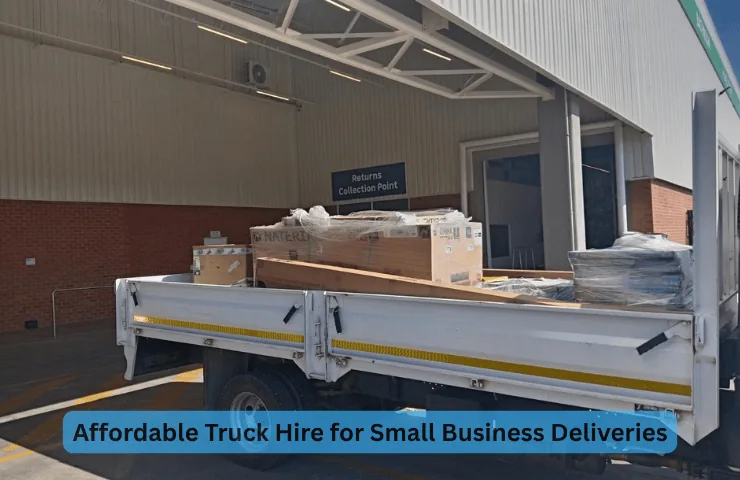
Affordable Does Not Mean Choosing the Lowest Price
The objective is not to find the cheapest truck on the internet.
It is to complete the delivery at the lowest reliable total cost.
Check recent customer reviews for patterns involving late arrivals, cancellations, damaged goods or poor communication. One negative review does not tell the entire story, but repeated complaints about the same problem deserve attention.
Use accurate load measurements, group deliveries by area and prepare stock before the vehicle arrives. These operational habits often save more money than negotiating a small reduction in the base rate.
Book Flexible Business Transport with Loadit
Loadit provides on-demand business delivery services using bakkies and trucks with professional drivers and optional helpers. Small businesses can book according to their actual delivery volume instead of carrying the fixed costs of an underused vehicle.
Provide a detailed inventory, accurate addresses, access information and all required stops when requesting your quote.
The more precise the booking, the easier it is to select the correct vehicle, control costs and complete every delivery reliably.