Hiring a truck for a wedding or event requires more planning than booking a vehicle and giving the driver an address.
You must select the right vehicle, coordinate collection times, confirm venue access and protect everything from fragile glassware to heavy staging equipment.
In our experience at Loadit, the biggest event transport problems usually start with one of three mistakes:
- Booking too late
- Choosing a vehicle based only on weight
- Failing to leave enough space for the return trip
A successful booking should cover the complete event schedule.
That includes collecting equipment from suppliers, delivering it in time for setup and returning after the event to remove everything before the venue's deadline.
What Can You Transport for a Wedding or Event?
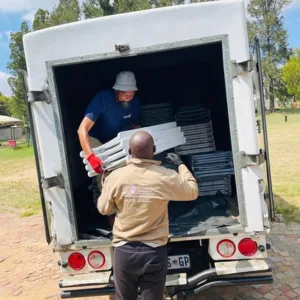
Event transport often involves large, irregular and fragile items that cannot fit inside an ordinary car.
A truck or bakkie may be used to transport far more than chairs and tables.
- Tiffany, Phoenix, plastic or wooden chairs
- Trestle, round and cocktail tables
- Lounge furniture and mobile bars
- Floral arches and large flower arrangements
- Glass vases, candles and centrepieces
- Tablecloths, runners and draping
- Lighting trusses and fairy-light backdrops
- Speakers, mixing desks and lighting equipment
- Dance-floor panels and stage decks
- Chafing dishes, gas burners and catering equipment
- Portable refrigerators and generators
- Marquee components and signage
The right vehicle will depend on the total volume, item dimensions, weight, fragility and number of collection points.
Useful article to read: How to Hire a Truck for Delivery Without Damaging Items
Which Truck Size Do You Need?
Do not choose a vehicle simply because its payload appears sufficient.
Event equipment often takes up far more space than its weight suggests.
| Vehicle | Typical event load |
|---|---|
| Single-cab bakkie | A compact sound system, approximately 15 to 20 plastic chairs, or last-minute supplies |
| 1.5-ton vehicle | Approximately 40 folding chairs, small floral installations, table linen and fragile centrepieces |
| 3-ton enclosed truck | Between 80 and 120 stacked banqueting chairs and ten to twelve large tables |
| 8-ton truck | Furniture for more than 200 guests, full staging systems and marquee equipment |
When a Bakkie May Be Enough
A single-cab bakkie can work for small deliveries and urgent supply runs. Typical loads may include:
- A compact sound system with two speakers, two subwoofers and a mixing desk
- Approximately 15 to 20 plastic chairs
- Several boxes of linen or décor
- Small signs and display stands
- A limited bridal-party delivery
- Last-minute catering or event supplies
A bakkie can also be useful when a venue has narrow entrances or limited parking. However, an open loading area exposes items to rain, wind, dust and road debris. Everything must be covered and secured properly.
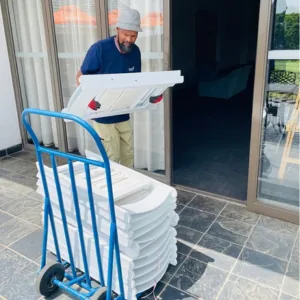
When to Book a 1.5-Ton Vehicle
A 1.5-ton panel van or small enclosed vehicle may suit a moderate décor load, such as:
- Approximately 40 folding chairs
- Small floral installations
- Boxes of table linen
- Fragile glass centrepieces
- Several folded tables
- A compact sound or lighting setup
An enclosed vehicle provides better protection for fabrics, flowers and décor. It is also easier to manoeuvre through residential streets, hotel parking areas and smaller venue entrances.
When to Book a 3-Ton Truck
A 3-ton enclosed box truck is a practical choice for many medium-sized weddings and corporate events. A typical load could include:
- Between 80 and 120 stacked banqueting chairs
- Ten to twelve large tables
- A small stage or dance floor
- Décor and floral structures
- Catering equipment
- Sound equipment packed in flight cases
The enclosed body protects items from dust and bad weather. It also gives the crew more room to build a stable load and separate heavy equipment from fragile décor.
When a Larger Truck Is Necessary
A larger truck, such as an 8-ton truck, may be required for a large wedding, festival, exhibition or corporate function. These vehicles are better suited to:
- Furniture for more than 200 guests
- Full staging systems
- Large lighting trusses
- Several mobile bars
- Marquee equipment
- Generators and heavy catering appliances
- Multiple events packed into one load
Heavy equipment may also require a tail lift. This is particularly important for generators, mobile bars and large flight cases when the supplier or venue does not have a loading ramp.
Why Volume Matters More Than Weight
One of the most common mistakes event planners make is choosing a vehicle according to payload alone.
For example, 100 empty plastic chairs may weigh only 400 to 500 kilograms. That is below the payload capacity of many vehicles. However, the chairs still occupy a large amount of physical space. They cannot be crushed or packed into every gap.
The same problem applies to floral arches, wire structures, marquee material and lounge furniture. These items may be relatively light but require considerable loading space.
Calculate the total volume using the packed length, width and height of the items. You should also note which items can stack, fold or dismantle.
We recommend leaving a minimum 20% volume allowance.
If your equipment only just fits according to your calculations, move up to the next vehicle size.
A larger truck booked in advance is normally cheaper than an emergency second vehicle on the day.
How Far in Advance Should You Book?
For an ordinary weekend, book your wedding or event transport four to six weeks before the event. During South Africa's busy wedding season, which typically runs from September to March, book eight to twelve weeks ahead.
If you're booking with Loadit, we also offer on-demand collection and delivery within the same day.
Your guest count, chair quantities and décor plan may change during the planning process. Review the booking once the final inventory is available.
Do not wait until the day before the event to discover that you need a larger truck.
Coordinate the Truck with Your Venue
Your transport schedule must work with the venue's rules. Before confirming the booking, speak to the venue manager about access, setup and breakdown.
Confirm the Setup Window
Ask when suppliers may enter the property.
Some venues allow delivery the day before the wedding. Others only open the loading area early on the morning of the event. Confirm:
- The earliest permitted arrival time
- The latest time by which setup must be complete
- Whether another event is taking place before yours
- Where trucks must park
- How long vehicles may remain in the loading area
- Whether suppliers must use a separate entrance
Plan the Breakdown or Strike
The return collection is just as important as the original delivery.
Many venues require all equipment to be removed immediately after the event. A midnight breakdown may need to happen between 00:00 and 03:00. Missing this window could result in penalty charges, additional venue hire or equipment being left unsecured overnight.
Ensure the truck, driver and helpers are booked for the correct date. A wedding ending after midnight means the collection falls on the following calendar day.
Check Access and Height Restrictions
A large truck may fit through the entrance gate but fail to clear a low beam or height bar.
Ask the venue about:
- Maximum vehicle height
- Narrow gates
- Weight-restricted roads or bridges
- Steep or uneven driveways
- Gravel roads
- Basement loading areas
- Turning space
- Distance between the loading zone and venue hall
If a large truck cannot reach the building, you may need a smaller shuttle vehicle or additional helpers with trolleys.
Arrange Security Clearance
Hotels, estates and secure event venues may require driver identification, vehicle registration details and supplier permits in advance.
Send the requested information at least 48 hours before the event. A fully loaded truck waiting at a security gate can delay every supplier behind it and increase waiting-time charges.
Plan Multiple Collection Points Carefully
Weddings often involve equipment from several suppliers. You may collect tables from one warehouse, flowers from another and sound equipment from a third.
List every address in the correct order and provide a time window for each stop. Allow approximately 30 to 45 minutes for loading at each supplier, depending on the quantity and preparation required.
Load heavy structural items first and fragile items last. A sensible loading order may be:
- Stage decks and trusses
- Tables and heavy furniture
- Stacked chairs
- Sound equipment in flight cases
- Boxes of linen and décor
- Glassware and centrepieces
- Fresh flowers
The route should reflect this loading order. If flowers are collected first, they may have to remain inside the vehicle while several heavy suppliers load around them.
Build Contingency Time into the Schedule
Do not plan wedding transport according to the fastest time shown on a navigation app. Loaded trucks travel more slowly than passenger vehicles, and venue deliveries often happen during busy traffic periods.
We recommend adding:
- At least 30 minutes to the expected supplier loading time
- Approximately 45 minutes to normal travel time in busy periods
- At least 30 minutes for venue unloading and access delays
- Additional time for stairs, small lifts or long carrying distances
Friday afternoon traffic in Johannesburg, Pretoria or Cape Town can change quickly. A buffer protects your setup schedule and gives the crew time to solve unexpected problems.
How to Pack Wedding and Event Equipment
Every category of event equipment needs suitable protection. Poor packing can lead to scratches, broken glassware, dirty linen and replacement charges from rental suppliers.
Fragile Décor and Glassware
Pack glassware, crockery, candles and vases in partitioned plastic crates or strong cardboard boxes.
Wrap fragile pieces individually and fill empty spaces so nothing can move.
Mark each box clearly and load fragile items after heavy furniture. Never place a crate of glassware beneath tables, staging or sound equipment.
Flowers and Floral Arrangements
Transport flowers in open crates with damp floral foam or a limited amount of water.
Each container must be secured so that it cannot tip while the vehicle turns or brakes.
Flowers should be loaded last and unloaded first. Keep them away from hot equipment, greasy catering items and anything that could crush the arrangements.
Chairs and Tables
Stack chairs according to their design and structural limit.
Wooden chairs may only stack four to six high, while some plastic chairs can stack higher. Place cardboard dividers or moving blankets between painted, wooden or acrylic chairs to prevent friction scratches.
Fold table legs before loading. Stack tables flat and protect finished surfaces with blankets. Where practical, alternate them top-to-top and bottom-to-bottom so exposed hardware does not gouge the table surfaces.
Linen and Draping
Pack tablecloths, runners and draping in sealed plastic bags or clean crates.
This protects them from dust, exhaust residue and dirty loading surfaces.
Never load clean linen next to damp floral crates, gas equipment or greasy catering appliances.
Sound, Lighting and Staging Equipment
Mixing desks, speakers, lighting fixtures and cables should travel in padded flight cases.
Lock the case wheels during transport and use ratchet straps to prevent movement.
Load stage decks and aluminium trusses flat on the truck floor. These items create a stable base for lighter equipment, but they must not be placed where their edges can damage furniture or décor.
Catering Equipment
Empty gas burners, mobile bars, chafing dishes and warming equipment before loading.
Remove oil, water and loose components.
Keep heavy catering units upright and strap them against the truck walls. Confirm that gas cylinders have been disconnected and handled according to the supplier's safety requirements.
When Is Special Loading Equipment Needed?
The correct equipment protects the cargo and reduces the risk of injury.
| Equipment | When it's needed |
|---|---|
| Enclosed truck | Recommended for most weddings because it protects electronics, linen, flowers and décor from rain, wind and dust |
| Moving blankets | Needed for unboxed furniture, wooden tables, acrylic pieces and painted frames |
| Ratchet straps | Essential for tables, flight cases, staging panels and other heavy items |
| Plastic crates | Useful for glassware, candles, cutlery, cables and small décor pieces |
| Trolleys and dollies | Reduce carrying time and protect workers when equipment must travel far from the loading area |
Who Should Check the Inventory?
A clear chain of custody helps prevent disputes over missing or damaged rental items.
At the Collection Point
The event coordinator or appointed logistics lead should check the inventory with the driver before loading begins.
- Count every item against the supplier's delivery note.
- Record existing chips, cracks or scratches.
- Photograph valuable items before loading.
- Confirm which items belong to each supplier.
- Obtain a signed collection record.
At the Venue
The logistics lead and venue representative should check the items as they are unloaded.
- Confirm that every collected item has left the truck.
- Inspect fragile and high-value equipment immediately.
- Report visible transit damage before signing the job completion note.
- Store empty crates and packing materials for the return trip.
Repeat this process during the breakdown. Midnight is not the time to rely on memory when hundreds of chairs, glasses and décor pieces must return to several suppliers.
What Can Go Wrong During a Midnight Breakdown?
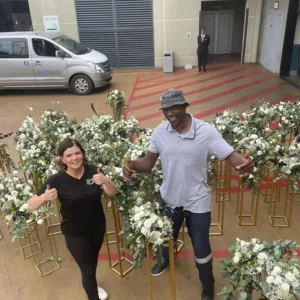
A representative Loadit case in Monavoni, Centurion, demonstrates why the return leg requires its own transport plan.
The event was a high-end wedding for 150 guests. The load included:
- 150 Phoenix chairs
- 15 wooden trestle tables
- A large floral arch
- Four pallets of glassware and centrepieces
A 3-ton enclosed truck, driver and two assistants handled the Friday delivery successfully. The same team was booked for the midnight breakdown after the wedding.
At 23:45 on Saturday, the venue confirmed that another event was scheduled for 07:00 on Sunday.
Everything had to be removed by 02:00. Missing the deadline would result in a R5,000-per-hour penalty.
The catering team, florists and décor crew began dismantling simultaneously. Items arrived at the loading area in no particular order.
The floral arch had been dismantled into rigid geometric frames that could not stack neatly. Chairs and décor were also packed less efficiently than they had been at the supplier's warehouse.
The return load occupied approximately 40% more space.
The 3-ton truck was full, but 40 chairs and four large tables remained inside the venue.
The Loadit driver contacted dispatch while the crew reorganised the truck. The helpers secured the tables against the sides and tightened the existing load with ratchet straps.
Loadit then routed a nearby 1.5-ton bakkie to the venue. The backup vehicle arrived at approximately 00:45. The remaining chairs were loaded and secured beneath a weather-resistant cover.
The venue was cleared by 01:45, fifteen minutes before the deadline.
The Lesson for Event Planners
Never assume your return load will occupy exactly the same space as the delivery load.
Warehouse teams pack carefully during normal working hours. After midnight, crews are tired, flowers have been dismantled and equipment may no longer stack in its original format.
Allow at least 20% extra volume for the return trip. If your equipment only just fits inside a 1.5-ton vehicle, consider booking a 3-ton truck.
What Information Is Needed for an Accurate Quote?
Loadit provides an instant quote. All you need is to choose your truck size, know your collection point, any additional stops and the delivery point, and whether you need additional helpers.
Get a quote in less than 60 seconds on the Loadit app.
Insurance
Ask whether Goods in Transit insurance applies and what value is covered. Confirm the excess, exclusions and claims process.
If the load includes expensive sound systems, crystal glassware, designer clothing or custom décor, the standard cover may not be sufficient. You may need additional insurance.
After-Hours Charges
Confirm whether the price includes midnight, weekend or public holiday work. Late-night breakdowns may carry different labour rates.
The quote should state the collection time, estimated completion time and overtime rate.
Waiting-Time Charges
Ask how much loading and unloading time is included. Confirm the hourly charge if:
- A supplier is not ready
- Venue security delays entry
- The loading area is occupied
- The event ends later than planned
- The breakdown crew has not finished packing
Ask suppliers to group, wrap and count everything before the truck arrives. Paying a truck and crew to wait while boxes are still being packed is an avoidable expense.
Cancellation and Rescheduling
Understand the cancellation deadline and refund terms. Ask what happens if the venue changes the access time or bad weather forces the event to move.
Backup Vehicles
Ask what will happen if the assigned truck breaks down. A provider with access to a flexible fleet or transport network is better positioned to send a replacement.
Emergency Contacts
Save the contact details of:
- The transport dispatcher
- The lead driver
- The event coordinator
- The venue manager
- Each rental supplier
- The setup and breakdown team leaders
Do not rely only on an office landline during a midnight collection.
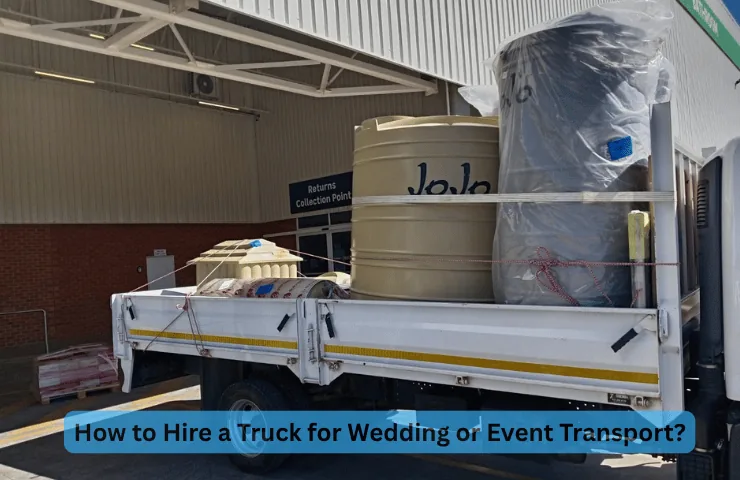
Final Advice for First-Time Event Transport Bookings
If you believe your load will only just fit, book the larger vehicle.
Event items rarely pack as neatly in practice as they do on a spreadsheet.
Use a detailed inventory, allow 20% extra loading volume and build time buffers into every stage. Confirm the venue's access rules, late-night collection requirements and security process before finalising the booking.
Most importantly, plan the breakdown with the same care as the setup.
A wedding can run perfectly and still end in unnecessary stress if the return truck is too small or arrives after the venue deadline.
Loadit offers flexible truck and bakkie hire with drivers and optional helpers for weddings, corporate functions and other events.
Provide your complete inventory, route and schedule when requesting a quote so the correct vehicle and team can be arranged.